
Epoxy Floor Repair and Recoating in Denver, CO
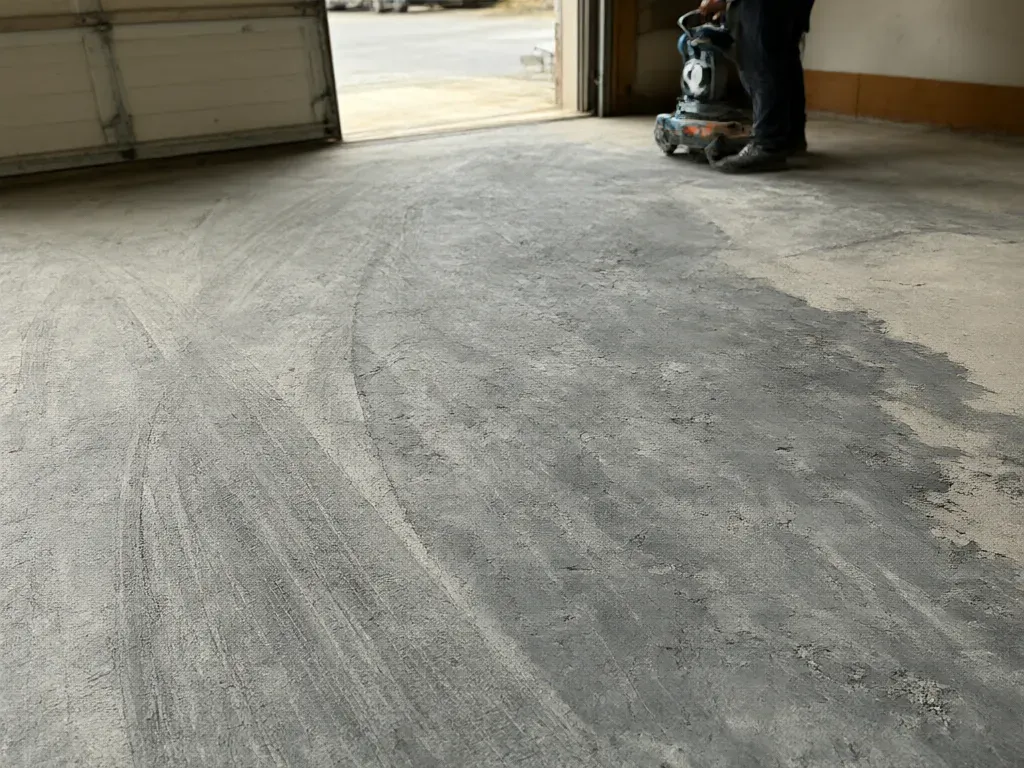
Denver Superior Epoxy Flooring offers professional epoxy floor repair and recoating in Denver, CO, for garage, basement and commercial floors that are peeling, yellowed or worn through. We work out why the coating failed before we fix it: hot-tire pickup, poor prep, moisture vapor, deicer or UV. Then we either screen and recoat a floor that's still bonded or grind the old coating off to bare concrete at CSP 2-3.
Spot repairs carry a $495 minimum and a 2-year workmanship warranty on the repaired area. A full grind-off adds $1.50 to $3.00 per sq ft for removal, and the new floor gets our full 15-year garage warranty.
Get a FREE Estimate
Or call (720) 953-6574
Epoxy Floor Repair Services
Most failed floors fall into one of these. Some have two or three at once.
Hot-Tire Pickup Repair
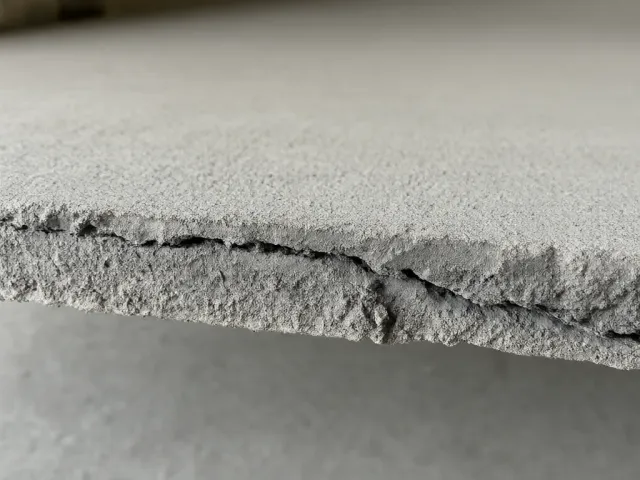
Tire-shaped bald patches mean the coating was too thin or too soft to stand up to hot tires. Patching those spots rarely holds, because the rest of the floor has the same weakness. We usually grind it all off and rebuild.
Peeling Coating Removal
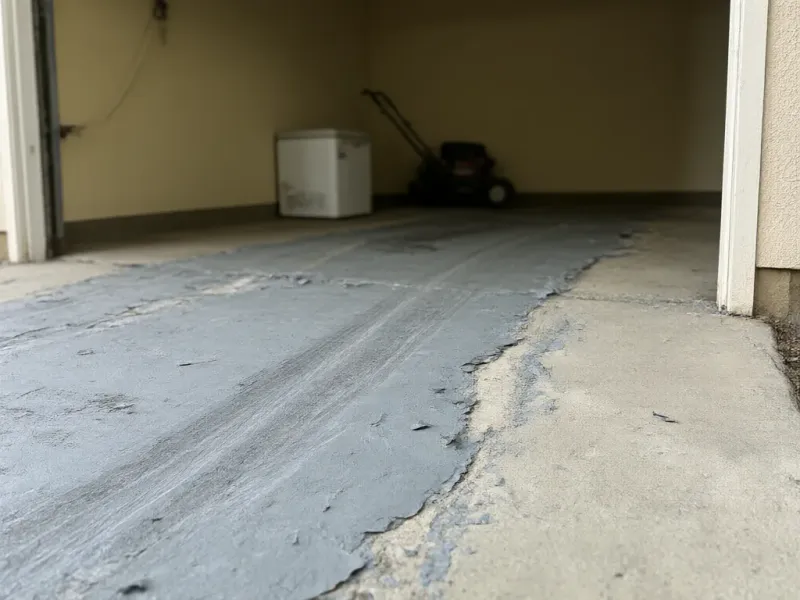
When a coating lifts in sheets, the bond is gone. We grind the floor to bare concrete at CSP 2-3, which also removes the residue an acid etch leaves behind, then start fresh.
Screen and Recoat for Worn Topcoats
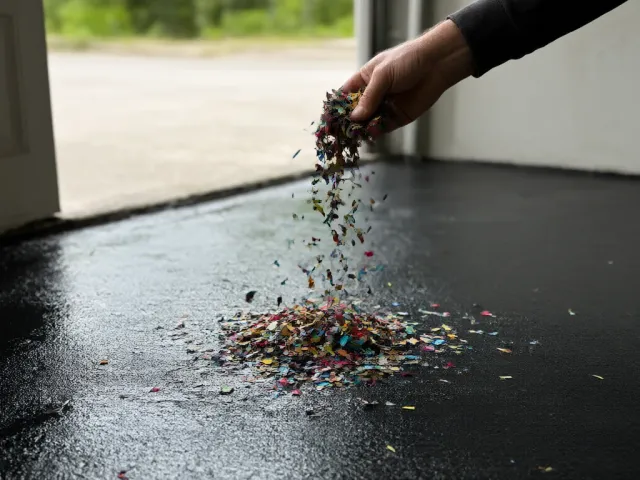
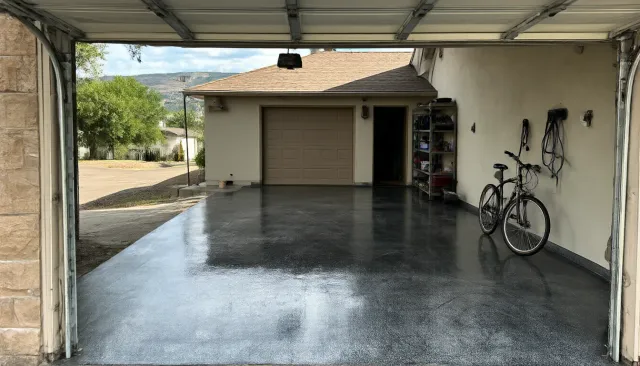
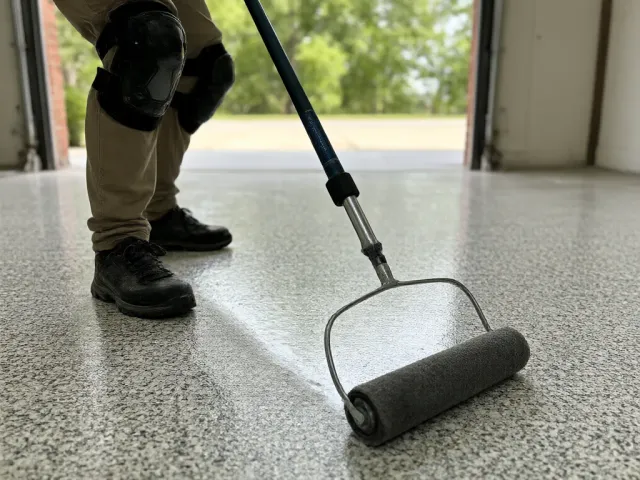
If the coating is still bonded but dull, scratched or stained, we screen the surface with an abrasive pad, clean it and roll a fresh polyaspartic topcoat. It's a one-day refresh without a full tear-off.
Spot Repairs and Gouge Fills
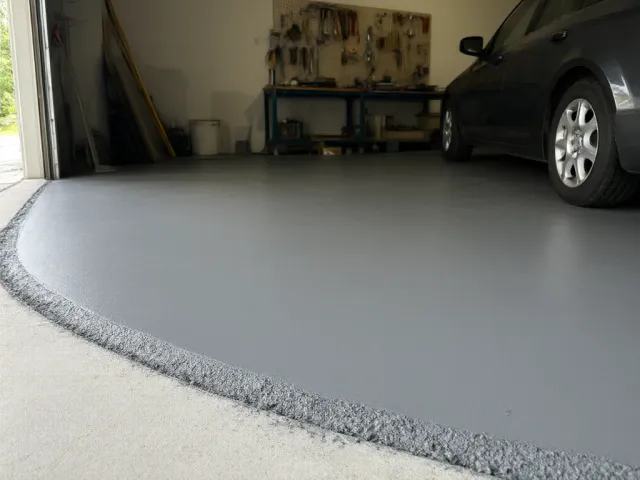
A dropped engine part or a dragged trailer jack can gouge any floor. We cut out the damage, fill it, rebroadcast flake and topcoat the area. Flake color can be matched closely, but an aged floor won't be identical.
Yellowed and UV-Faded Floors
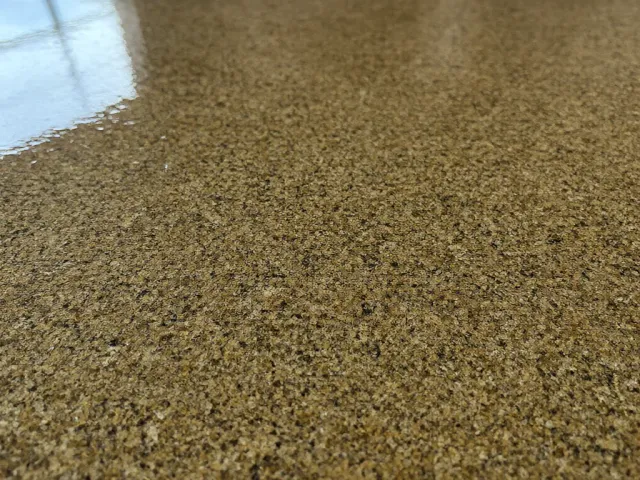
Epoxy-only topcoats amber near garage doors and windows. If the base is sound, a polyaspartic recoat fixes the color for good. If the yellowing comes with peeling, it's a grind-off.
Moisture Blister Repair
Bubbles and blisters in a basement or on-grade floor usually mean moisture vapor pushed the coating up. We grind the coating off, test the slab and use a moisture-mitigating primer before recoating.
Before and After
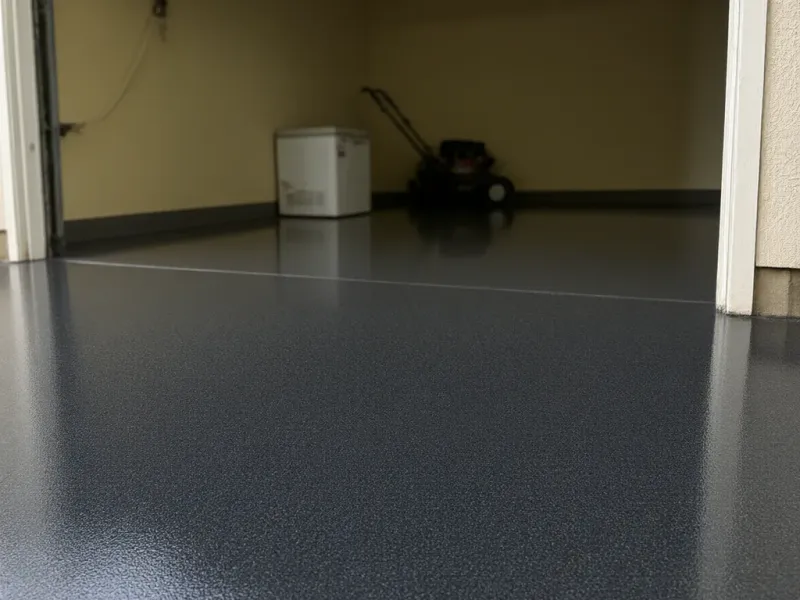
Why Epoxy Floors Fail
Coating failures around the metro trace back to a short list of causes. Knowing which one you've got decides whether a recoat will last or just fail again.
Acid Etch Instead of Grinding
Acid etching reaches about CSP 1 and leaves salts in the pores. The coating sits on top instead of keying into the concrete, so it peels at the first stress.
Thin Water-Based Kits
At 2 to 3 mils dry, a kit has no thickness to resist hot tires, dropped tools or mag chloride. It's the most common failure we see in garages.
Moisture Vapor
On basements and on-grade slabs, untested moisture vapor pushes coatings into blisters. If nobody tested the slab before the first coating, we test it before the second.
Epoxy Topcoats in the Sun
Aromatic epoxy yellows under UV, and at 5,280 feet that happens faster near an open door or on a patio. The color change is cosmetic at first, then the surface goes chalky.
Deicer on a Thin Coating
Magnesium chloride finds every pinhole and worn spot in a thin coating, gets under it and attacks the concrete beneath. The coating then lifts in flakes around the tire paths. A thicker system rebuilt on ground concrete keeps the deicer on top where it rinses off.
Repair, Recoat or Start Over?
We test the bond before we decide. A scraper and a utility knife at the edges and in a few spots in the middle tell us whether the coating is stuck to the concrete or just lying on it.
If it's bonded and only worn, a screen and recoat makes sense. If damage is isolated, like one gouge or a small area by the door, a spot repair is fine. If it lifts easily anywhere beyond a small area, the whole floor comes off, because patching a failed bond means paying twice.
We'll be straight about how a repair will look. A patched area on an older flake floor will be close in color but not invisible. If that matters to you, a full recoat is the better money.
Repair and Recoating Prices
Spot repairs carry a $495 minimum. Old coating removal adds $1.50 to $3.00 per sq ft on top of the new system's price, so a two-car garage gets the removal charge plus the $2,800 to $4,300 flake system price.
Heavy spalling found under a failed coating is patched at $6 to $12 per sq ft of damaged area. A moisture-mitigating primer adds $2.00 to $3.50 per sq ft when the slab tests high. The full grind-off and recoat comes with the 15-year garage warranty.
Every repair quote is written before work starts. If we open up a floor and find more damage than the estimate showed, we stop, show you, and price the change before going on.
Fixing Floors Other Installers Put Down
A good share of our repair calls are floors someone else coated, and we don't judge. It helps to know what's on the floor, so dig out any product name or paperwork you have. If you don't know, we'll figure it out at the estimate.
One homeowner rolled a box-store kit onto his garage in spring. By the first hot week of July, the tires had pulled it up. We ground the rest off, took the slab to CSP 2-3 and put down a full flake system with a polyaspartic top. That's the pattern for most repair jobs: find the cause, remove it, build it right.
Get a Failed Floor Diagnosed
Call (720) 953-6574 and Kyle will come test the bond, find the cause and give you a written repair or recoat price in the same visit.