
Stained Concrete Floors in Denver, CO
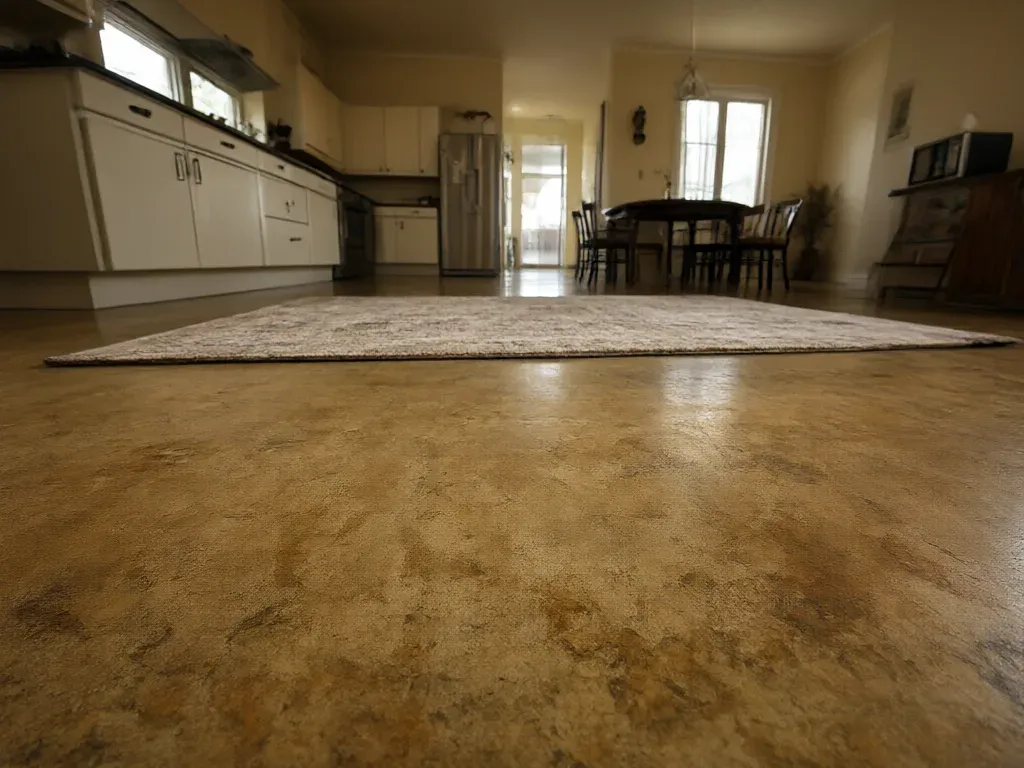
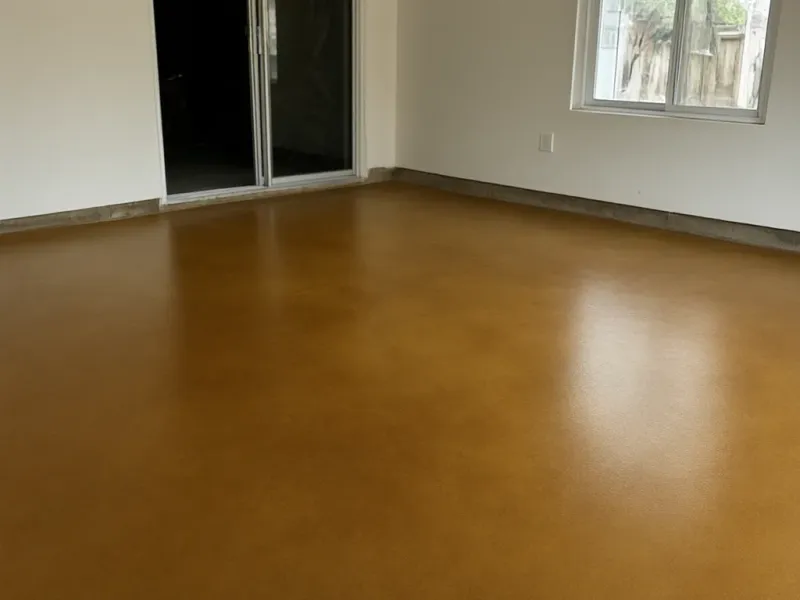
Denver Superior Epoxy Flooring offers professional stained concrete floors in Denver, CO, using reactive acid stains and water-based stains on interior and covered slabs. Acid stain reacts with the lime in the concrete for mottled browns, ambers and soft greens, while water-based stain fills the pores with more even, predictable color. Every stained floor is cleaned, lightly profiled, neutralized and sealed.
Stained concrete gives you a finished floor from the slab you already have, without a thick coating on top. Most jobs take 2 to 3 days and run $3.50 to $7 per sq ft, with a 3-year workmanship warranty.
Get a FREE Estimate
Or call (720) 953-6574
Stained Concrete Floor Options
Stain is about color. The sealer on top and the prep underneath decide how it wears.
Acid-Stained Concrete Floors
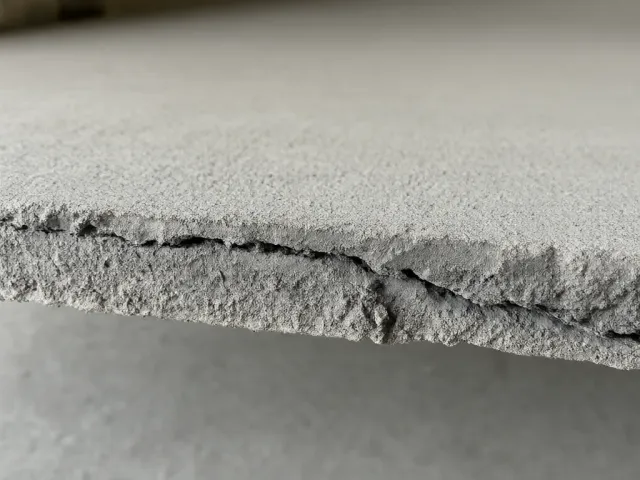
Metallic salts in an acid solution react with the slab and create color that's part of the concrete, not sitting on it. Every slab reacts a little differently, so no two acid-stained floors match.
Water-Based Stained Concrete
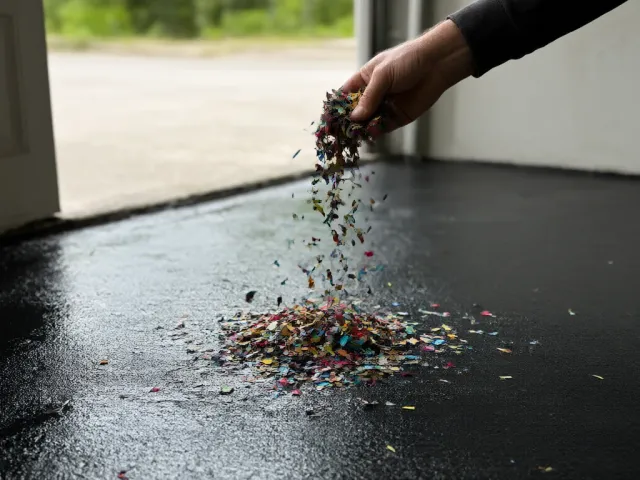
Water-based stain doesn't react chemically. It soaks into the pores and gives more consistent color, including grays, blacks and blues that acid stain can't produce.
Stained and Polished Concrete
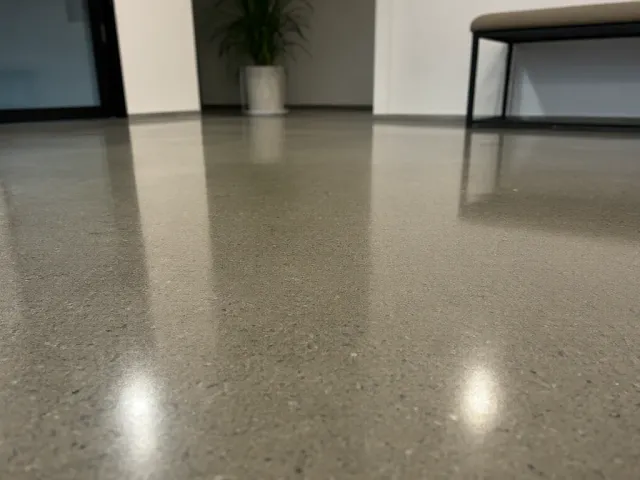
Color can be added during the polishing sequence, then densified and polished to 800, 1,500 or 3,000 grit. You get stain color with a polished sheen and no topical sealer to wear off.
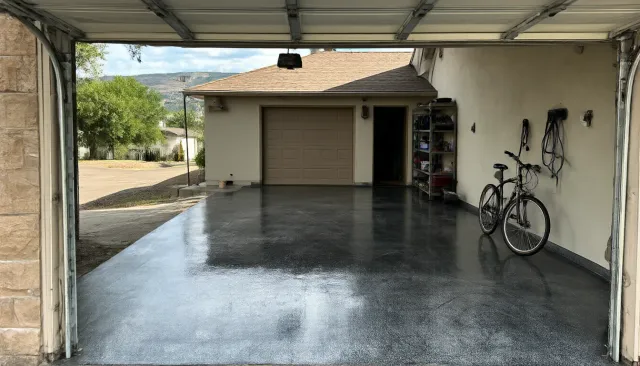
Stained Concrete Under a Clear Polyaspartic
For kitchens, mudrooms or light commercial floors, a clear polyaspartic over the stain gives far more wear resistance than an acrylic sealer. It's UV stable, so it won't amber near windows.
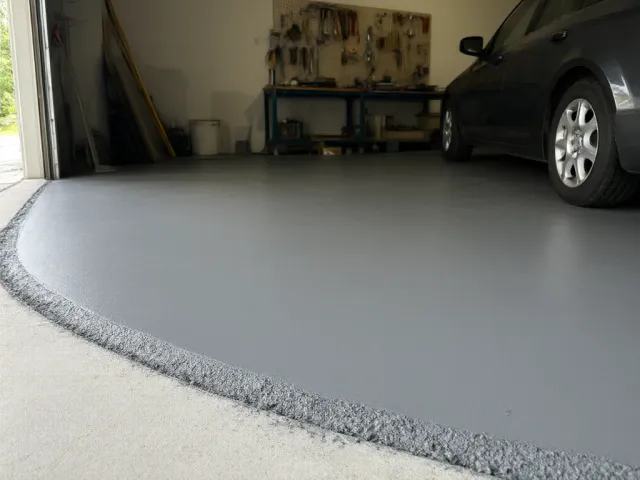
Stained Basement and Covered Patio Concrete
Basements and covered patios take stain well. Basements get a moisture check first, since vapor pushing through the slab can cloud some sealers.
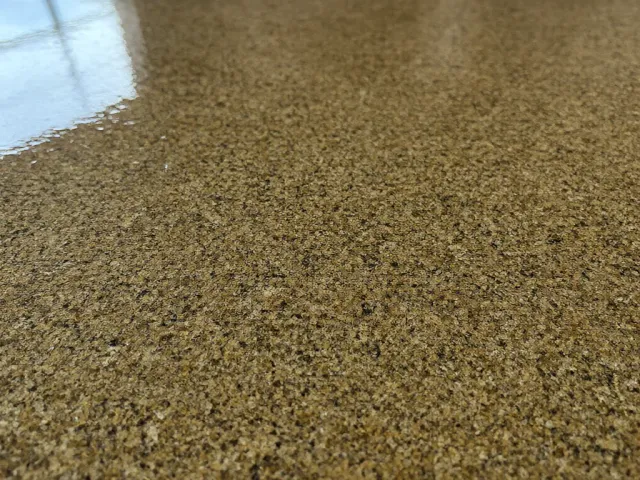
Stained Concrete for Shops, Cafes and Offices
Stained concrete gives a small storefront, cafe or office a warm, finished floor on an existing slab. With a clear polyaspartic over it, the floor takes daily foot traffic and mopping without stripping and waxing.
Before and After
Acid Stain vs Water-Based Stain
The two get lumped together, but they work differently and suit different people.
Acid Stain
Acid stain gives earthy, variegated color that looks like aged leather or stone. It only reacts where there's enough lime in the concrete, so patched areas and very hard troweled spots can take less color. You're buying a look you'll see for the first time when it's done, and that's part of the charm.
After the reaction, acid stain leaves a residue that has to be neutralized and rinsed until the water runs clear. Skip that step and the sealer won't bond, which is behind a lot of the cloudy, peeling stained floors we're asked to fix.
Water-Based Stain
Water-based stain gives you control. Colors are more predictable, can be mixed to match a sample and include modern grays and charcoals. It sits closer to the surface, so the sealer on top matters more.
Water-based stain is also the better pick when acid stain won't react well, like on heavily patched slabs or concrete that's been ground, and it can be layered to build depth.
What Your Slab Will Look Like Stained
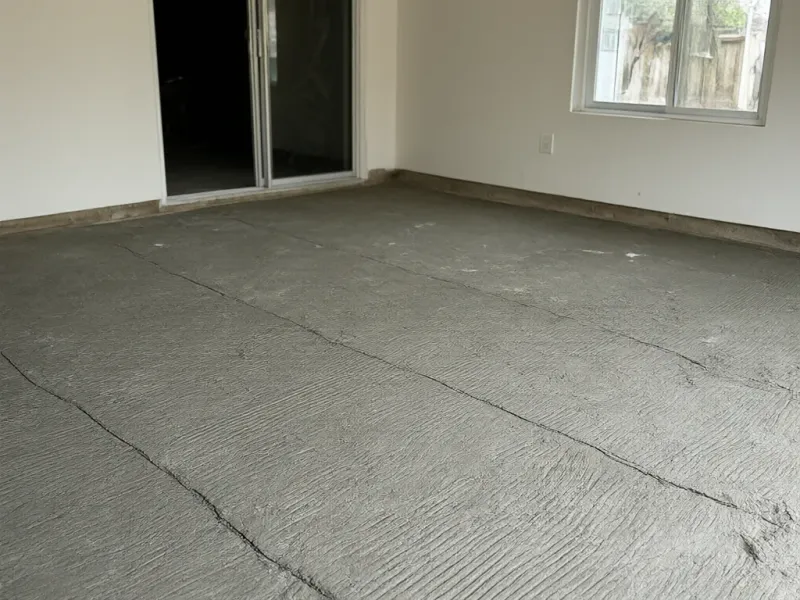
Stain is translucent. It doesn't hide anything. Cracks, patches, carpet tack strip holes, old glue shadows and areas where a previous sealer soaked in will all show through, often darker or lighter than the rest.
That's why we do a test patch before the whole floor. You see how your actual slab takes the color, and we can adjust the stain, the dilution or the method before committing.
Different pours take color differently too. A basement slab next to a garage slab, or an addition next to the original house, can come out as two noticeably different shades. We'll flag that at the estimate.
Getting to the slab is part of the job. Carpet, pad, tack strip, vinyl and tile adhesive all have to come up, and any glue left behind will block the stain. We grind or strip those areas and include it on the quote, at $1.50 to $3.00 per sq ft where heavy glue is involved.
Sealers for Stained Concrete
Every stained floor gets sealed, and the sealer decides how much upkeep you'll do.
Acrylic sealer is the cheapest option and gives a nice wet look, but it wears in traffic lanes and usually needs a floor finish or reapplication over time. A urethane sealer is tougher and more chemical resistant. A clear polyaspartic is the toughest of the three, doesn't yellow and is what we recommend for kitchens, mudrooms and anything commercial.
Upkeep is a dust mop and a pH-neutral cleaner. Avoid vinegar and citrus cleaners, which dull most sealers. In high-traffic areas, plan on refreshing an acrylic sealer every so often, while urethane and polyaspartic sealers go much longer between touch-ups.
Stained Concrete Costs and Timeline
Stained concrete runs $3.50 to $7 per sq ft, depending on how much prep the slab needs, the stain type and the sealer. Removing old coatings or heavy glue adds $1.50 to $3.00 per sq ft. Stained and polished concrete runs in the $4 to $9 per sq ft range of a polished floor.
Most stained floors take 2 to 3 days: clean and profile, stain and neutralize, then seal. The finished floor carries a 3-year workmanship warranty.
Compared with a coating, stain costs less and keeps the concrete look, but it shows more of the slab and needs more sealer upkeep. A full-broadcast flake floor at $6.50 to $9.00 per sq ft hides more and wears harder. We'll tell you honestly which suits the room.
See a Stain Test on Your Concrete
Call (720) 953-6574 to set up a free estimate. We'll look at the slab, talk through acid and water-based options and give you a written price.