
Industrial Epoxy Floor Coatings in Denver, CO
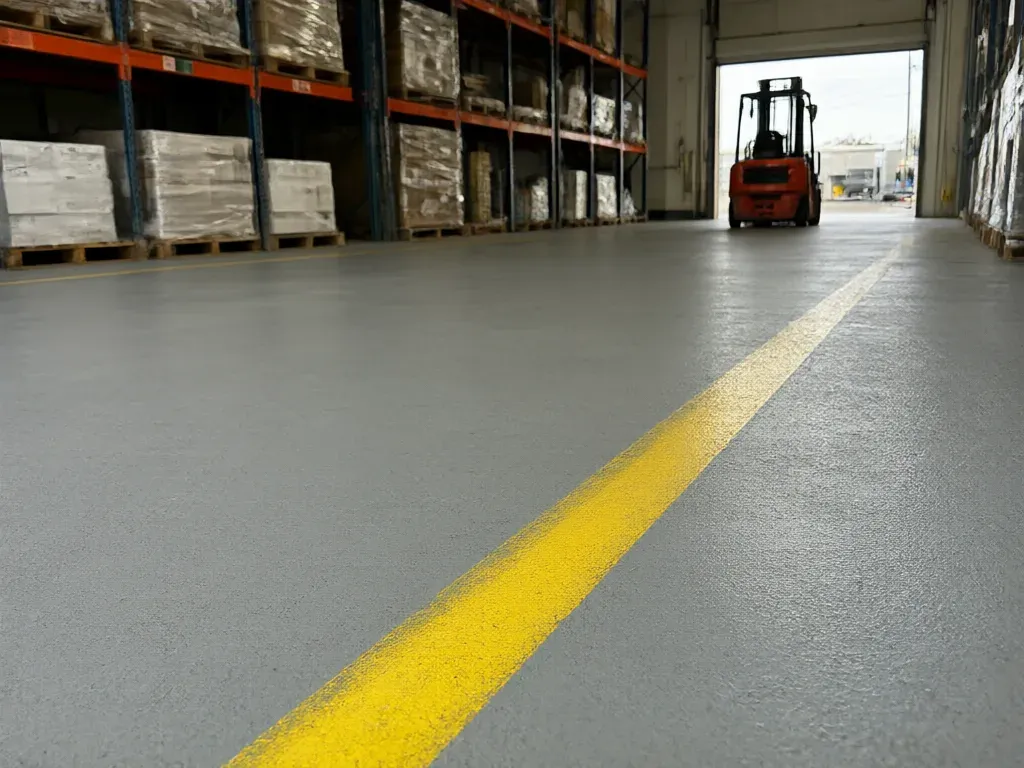
Denver Superior Epoxy Flooring offers professional industrial epoxy floor coatings in Denver, CO, built on the warehouse and plant floor work Kyle Brandt did before founding the company in 2007. We diamond grind slabs to CSP 2-3, then build high-build epoxy at 20 to 30 mils, or epoxy mortar at 1/4 inch where forklifts turn. Chemical-resistant topcoats and safety line striping finish the job.
Industrial floors fail at the joints, at the forklift turns and wherever chemicals sit. We plan around those spots first. Floors of 5,000 sq ft and up run $4 to $8 per sq ft, and industrial systems carry a 5-year warranty written per job.
Get a FREE Estimate
Or call (720) 953-6574
Industrial Epoxy Floor Coating Systems
Most facilities need more than one system. A loading dock, a battery room and an open storage aisle all wear differently.
High-Build Epoxy Warehouse Floors
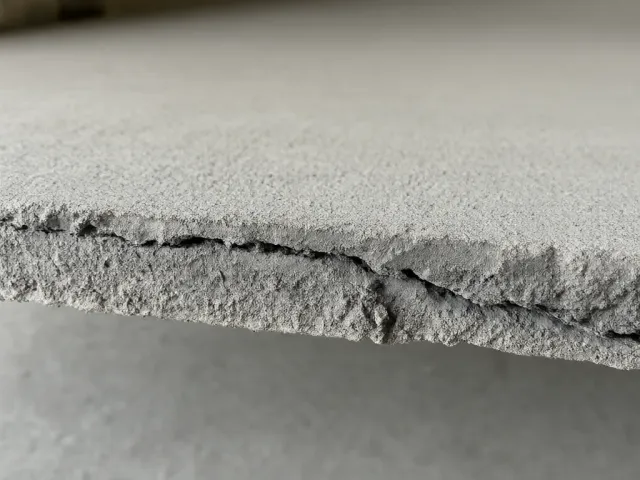
A 100% solids epoxy built to 20 to 30 mils over a ground slab, with a chemical-resistant topcoat. It brightens a warehouse, seals the concrete against dusting and makes spills easy to spot and clean.
Epoxy Mortar for Heavy Traffic Zones
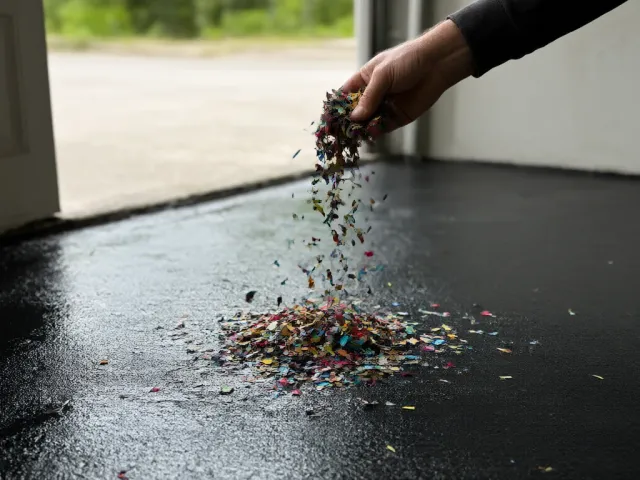
Where hard forklift wheels pivot, at dock plates and around racking, a troweled epoxy mortar at 1/4 inch takes the punishment a thin coating can't. It also rebuilds worn, uneven concrete.
Chemical-Resistant Novolac Epoxy
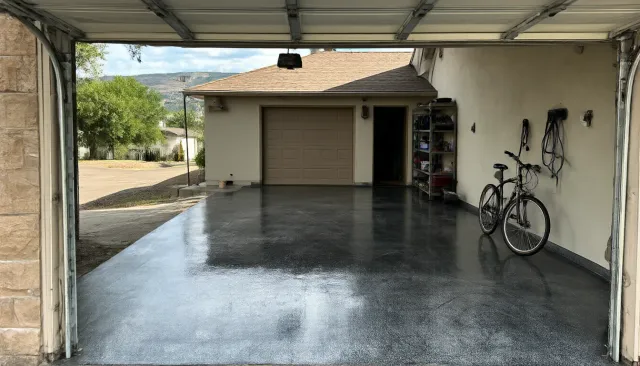
Novolac epoxy holds up to stronger acids and solvents than standard epoxy. We use it in battery charging areas, chemical storage and containment curbs.
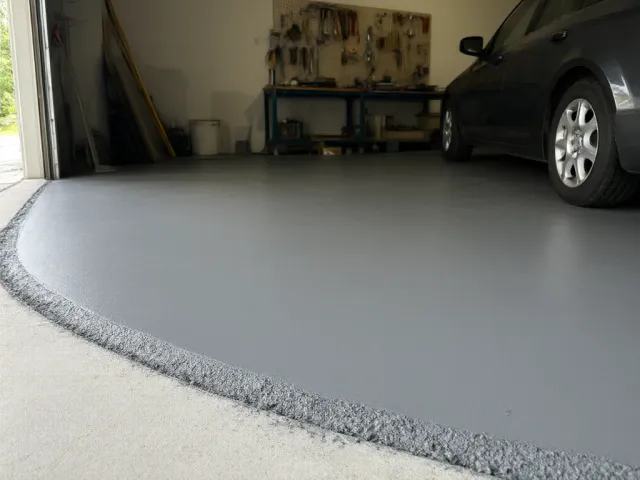
Safety Striping and Aisle Marking
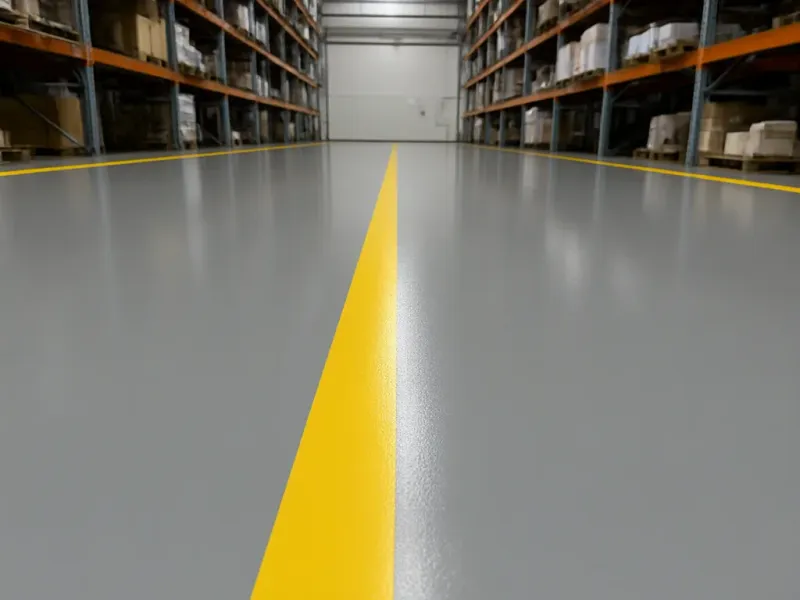
OSHA requires permanent aisles to be appropriately marked where mechanical handling equipment runs. We stripe forklift lanes, pedestrian walkways and hazard zones at $1.50 to $3.00 per linear ft.
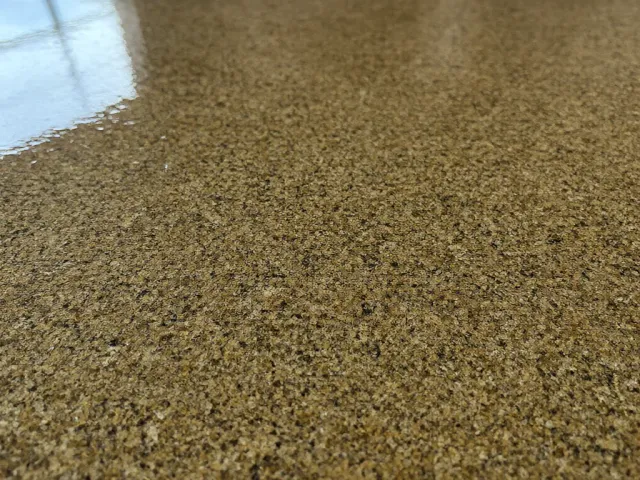
Anti-Slip Industrial Coatings
Wet process areas, wash bays and ramps get aluminum oxide grit in the topcoat or a quartz broadcast system, so the floor stays walkable when it's wet or oily.
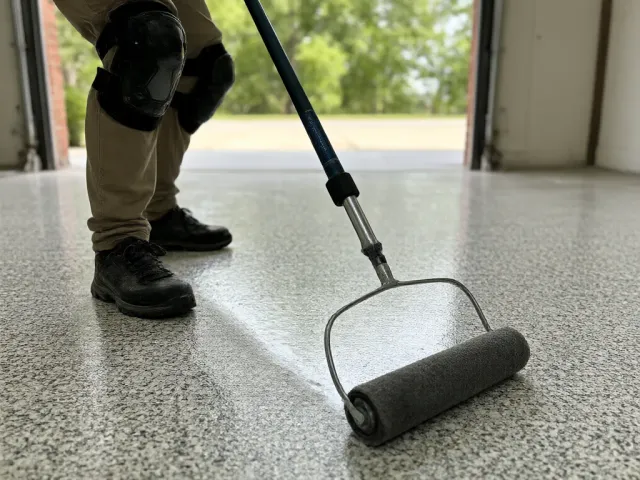
Urethane Cement for Wet Process Areas
Food, beverage and washdown rooms get urethane cement at 3/16 to 1/4 inch instead of epoxy. It handles hot water, steam cleaning and thermal shock, and it tolerates more slab moisture than most coatings.
Before and After
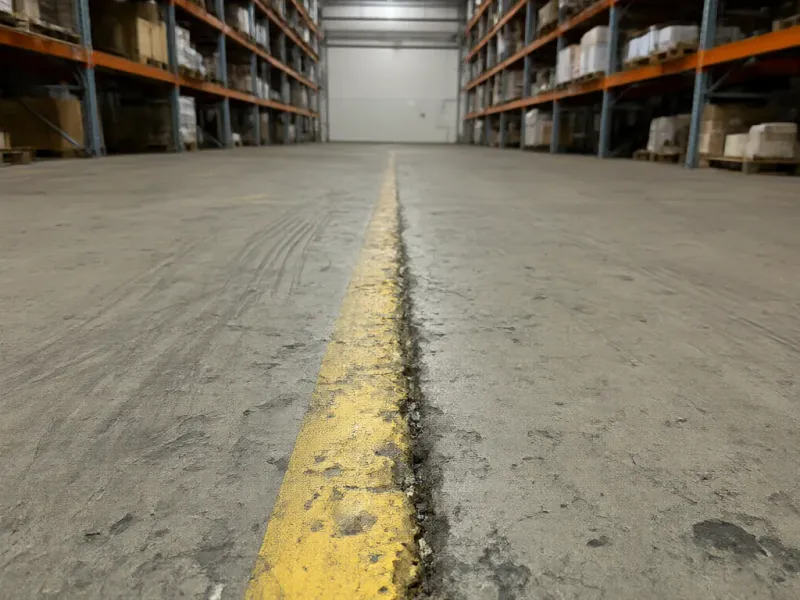
Where Industrial Floors Fail First
A floor that fails in a warehouse rarely fails everywhere at once. It goes at the weak spots, and those are predictable.
Control Joints
Joint edges chip and spall as forklift wheels slam across them. We rebuild damaged edges and fill joints with a semi-rigid filler that supports the wheel but still lets the slab move.
Forklift Turns and Dock Plates
Pivoting wheels grind a thin coating off in weeks. Those zones get epoxy mortar at 1/4 inch while the rest of the floor gets high-build epoxy.
Chemical and Battery Areas
Battery acid, solvents and cleaning chemicals soften standard epoxy over time. Novolac epoxy and a cove or curb keep spills contained and the concrete underneath intact.
Moisture in Older Slabs
Older industrial slabs were often poured without a vapor barrier. We moisture test before quoting, and a mitigating primer adds $2.00 to $3.50 per sq ft when the readings call for it.
Calcium chloride domes sit 60 to 72 hours and RH probes sit 24 hours, so on a big floor we test several spots across the slab before the install date is set.
Industrial Coatings for Denver Facilities
The metro's industrial base is a mix of distribution warehouses along the interstates, light manufacturing, aerospace and machine shops, food and beverage production, and licensed grow facilities. Each one wears a floor differently.
Distribution floors need abrasion resistance and clear striping. Machine shops need oil resistance and a light color that shows dropped parts. Food and beverage rooms with hot washdowns need urethane cement instead of epoxy. Grow rooms need a washable floor with no seams and a cove base, so water and nutrients have nowhere to sit.
The common thread is the same: a ground slab at CSP 2-3, a system thick enough for the wheels and the chemicals, and joints and edges rebuilt before anything is coated. Thin paint-grade coatings on industrial floors are where most of our tear-off work comes from.
Scheduling Around Production
Most facilities can't shut down the whole floor. We phase the work by bay or aisle, run weekends and off-shifts where it helps, and run dust extraction on every grinder.
Epoxy-only systems take foot traffic in 24 hours and wheeled traffic after 5 to 7 days, with full chemical cure at 7 days. Where a section has to reopen sooner, a polyaspartic topcoat is walkable in 4 to 6 hours. We plan the sequence with your operations manager before work starts.
Unheated warehouses are the other scheduling question. Resin needs a warm enough slab to cure, so winter work in a cold building means temporary heat for the install and cure window, or moving the work to a warmer month. We check slab temperature before we mix, every time.
Industrial Floor Coating Costs
Industrial epoxy on floors of 5,000 sq ft and up runs $4 to $8 per sq ft. Epoxy mortar, novolac and anti-slip zones sit at the upper end. Line striping runs $1.50 to $3.00 per linear ft.
Heavy spall and joint repair runs $6 to $12 per sq ft of damaged area. Removing an old failed coating adds $1.50 to $3.00 per sq ft. Every number is on the written scope before we start, and the finished floor carries a 5-year warranty written for the job.
Three things move an industrial price the most. How much joint and spall repair the slab needs, how much of the floor needs epoxy mortar instead of high-build epoxy, and how much the work has to be phased around production. A wide-open empty building is the low end of the range.
Walk Your Facility Floor With Us
Call (720) 953-6574 to schedule a site visit. We'll look at traffic patterns, test the slab and send a written scope with a phased schedule.