
Polyaspartic Floor Coatings in Denver, CO
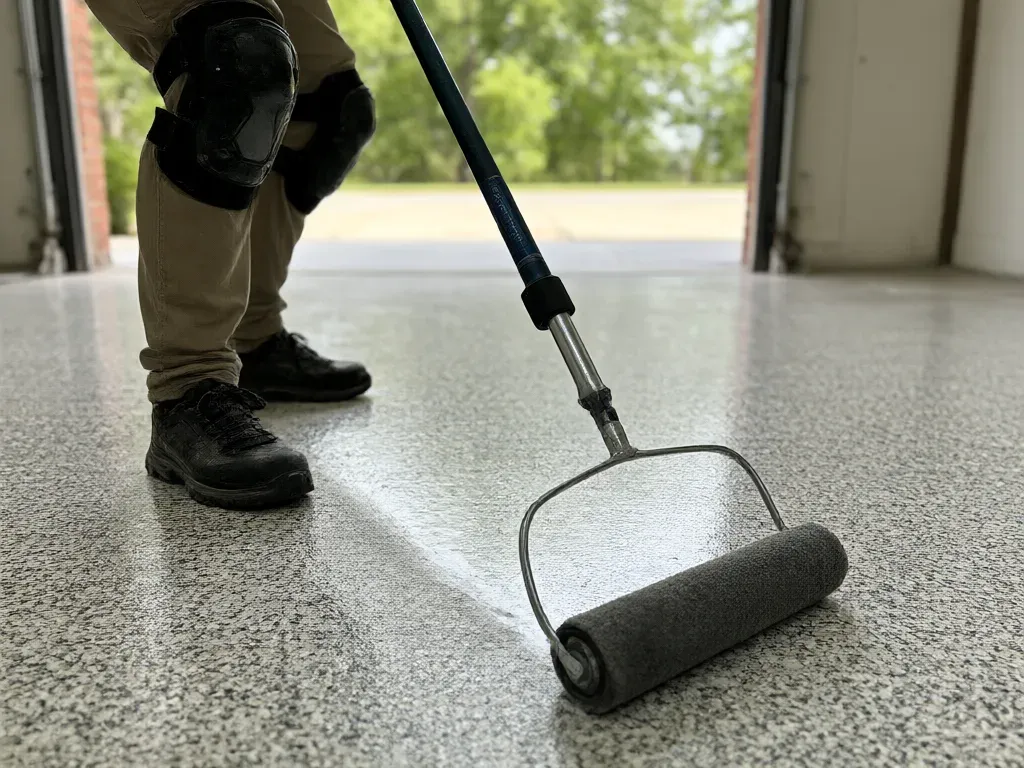
Denver Superior Epoxy Flooring offers professional polyaspartic floor coatings in Denver, CO, backed by 5,200+ floors coated since 2007. Polyaspartic is an aliphatic polyurea: it's UV stable, cures in hours instead of days, and stands up to hot tires and road chemicals better than epoxy alone. We roll it at 8 to 10 mils as the topcoat over a 100% solids epoxy base, which is what makes a 1 day garage possible.
If you've been quoted a polyurea floor coating, it's the same family. Pure polyurea cures too fast to roll by hand, so the coatings industry uses polyaspartic, a slower, workable form of it. You can walk on it in 4 to 6 hours and park in 24 hours, compared with 5 to 7 days on an epoxy-only floor.
Get a FREE Estimate
Or call (720) 953-6574
Polyaspartic Floor Coating Systems
Polyaspartic shows up on most of our floors in one form or another. These are the ways we use it.
Polyaspartic Topcoat Over Epoxy and Flake
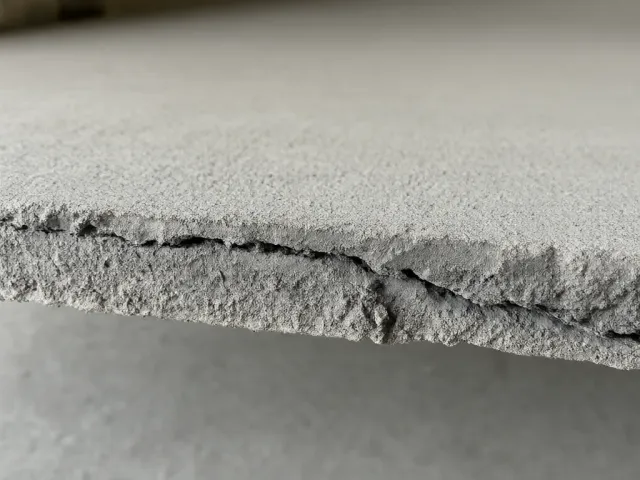
Our standard garage build. A 10 to 12 mil epoxy base, full-broadcast flake, then clear polyaspartic at 8 to 10 mils. The epoxy gives bond and thickness, the polyaspartic gives UV and scratch resistance.
Clear Polyaspartic Over Solid-Color Epoxy
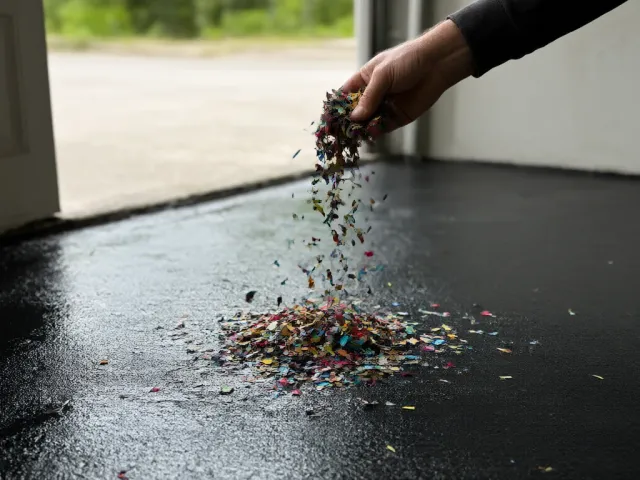
For shops and utility rooms, a pigmented epoxy base gets a clear polyaspartic wear layer. It keeps the solid color from yellowing and makes the surface harder to scuff. This system runs $5.00 to $7.00 per sq ft.
Polyaspartic Patio and Outdoor Coatings
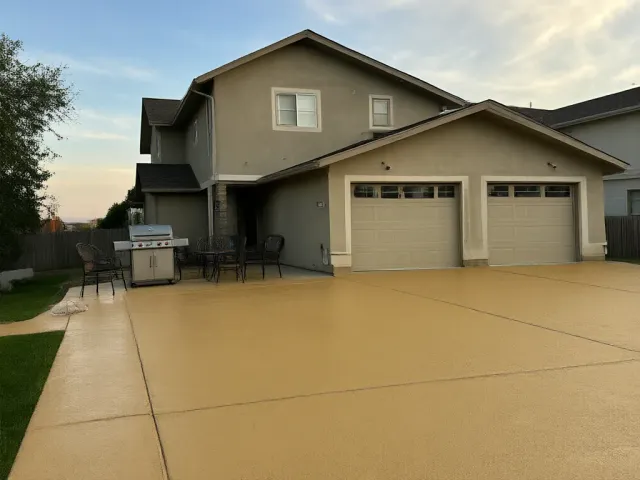
Outdoors is where polyaspartic earns its keep. It holds color in full sun, and we add grit to the topcoat so wet feet and light snow don't make it slick. Outdoor systems run $6 to $10 per sq ft.
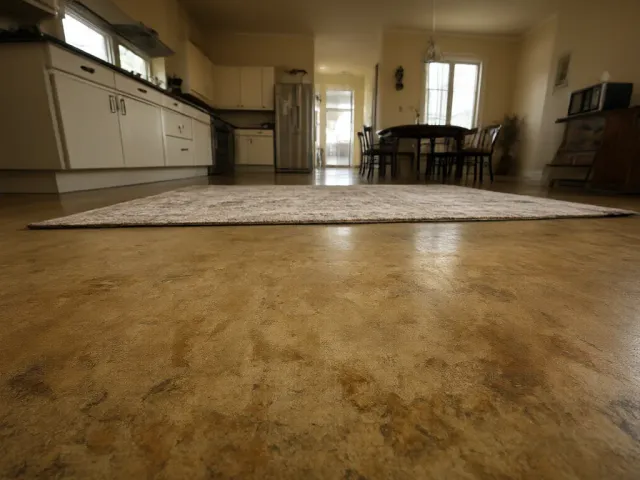
Clear Polyaspartic Over Stained Concrete
Stained concrete can be sealed with clear polyaspartic instead of an acrylic sealer. It costs more up front and lasts far longer, with no stripping and rewaxing.
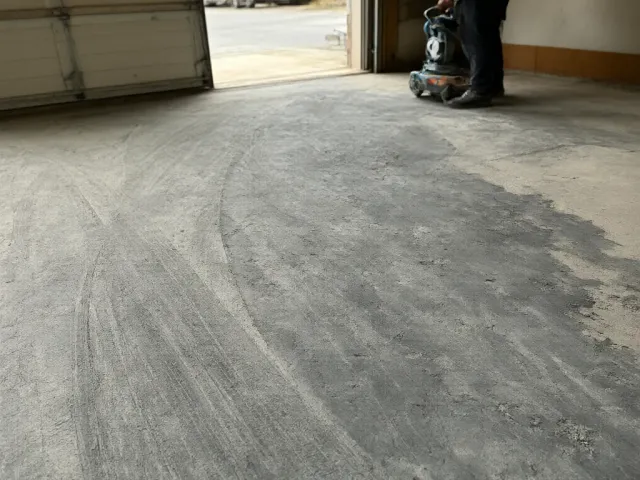
Polyaspartic Recoat Over a Worn Topcoat
If your coating is still bonded but dull and scratched, we can screen the surface and roll a fresh polyaspartic coat. It's a one-day refresh that skips the full grind-off.
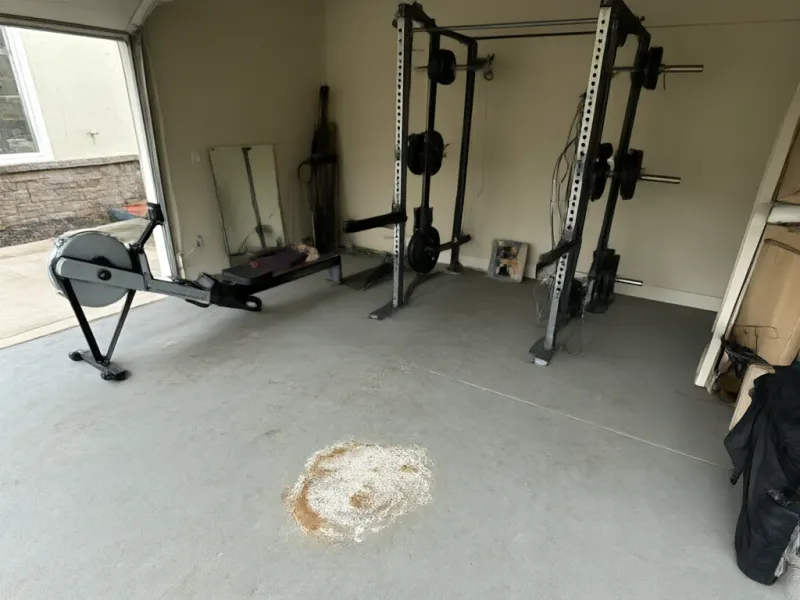
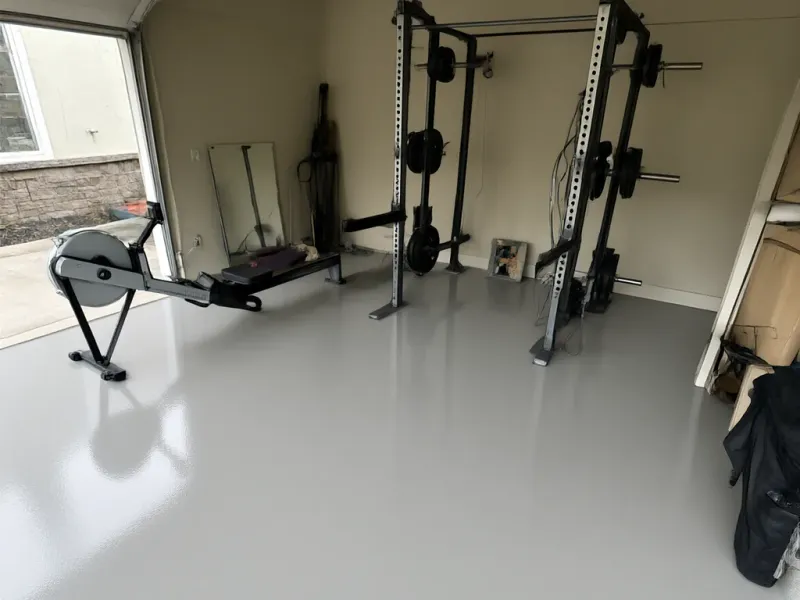
Before and After
Polyaspartic vs Epoxy vs Polyurea
These three get mixed up in quotes all the time. Here's the plain version.
Epoxy
Epoxy is the best base coat we know of. It soaks into ground concrete, builds thickness fast and bonds hard. It's also an aromatic resin, so UV turns it amber, it cures slowly and its surface scratches more easily than a polyaspartic.
Polyurea
Classic polyurea is extremely tough and sets in seconds, which is why it's sprayed in industrial work like truck bed liners. On a garage floor that speed is a problem. You can't roll it evenly or broadcast flake into it.
Polyaspartic
Polyaspartic is an aliphatic polyurea with a slower, controllable reaction. It rolls on, stays clear and doesn't yellow. Each coat is relatively thin, which is why we put it over an epoxy base instead of trying to build the whole floor out of it.
What Polyaspartic Handles Better in Colorado
UV is the big one. At 5,280 feet there's less atmosphere filtering sunlight, and an epoxy topcoat near an open garage door or on a patio ambers far sooner than it would at sea level. Polyaspartic doesn't.
Cold is the second. Polyaspartic cures in cooler garages than epoxy will, so winter installs don't stall for days. We still check slab temperature before mixing.
Chemicals are the third. A cured polyaspartic topcoat shrugs off magnesium chloride, gasoline drips, brake fluid and the plasticizers in hot tires, which are the things that wreck thin garage coatings.
Where Polyaspartic Isn't the Whole Answer
Some installers sell a single coat of polyaspartic straight on concrete as a one-day floor. It's fast, but a thin film over a lightly prepped slab has little to hold onto. We'd rather put the thickness in the epoxy base.
A slab with high moisture vapor needs a moisture-mitigating primer underneath, no matter what goes on top. Metallic epoxy floors need an epoxy body for the effect to work. And commercial kitchens with hot-water washdowns get urethane cement, not polyaspartic.
How a Polyaspartic Floor Goes Down in 1 Day
Test and Grind
We check the slab for moisture where needed and diamond grind it to CSP 2-3. Cracks are chased and filled.
Epoxy Base and Flake
The 100% solids epoxy base goes down at 10 to 12 mils, with flake broadcast in if you chose a flake system.
Small-Batch Mixing
Polyaspartic has a short working time, so it's mixed in small batches and rolled in sections, keeping a wet edge so there are no lap lines.
Topcoat at 8 to 10 Mils
The clear polyaspartic goes on at 8 to 10 mils, with grit added on ramps, steps and outdoor slabs.
Back in Use
Walk on it in 4 to 6 hours and park in 24 hours. Leave harsh cleaners off the floor until the 7-day full cure.
Polyaspartic Coating Questions
Is polyaspartic the same thing as polyurea?
It's a type of polyurea. Polyaspartic reacts more slowly than classic polyurea, which makes it possible to roll on a floor by hand. When a quote says polyurea floor coating for a garage, it's almost always a polyaspartic.
Why not make the whole floor out of polyaspartic?
Each coat is thin, and we want thickness and bond at the concrete. A 10 to 12 mil epoxy base does that job better and costs less, and the polyaspartic on top does the UV and wear job better.
Will a polyaspartic floor turn yellow?
No. It's aliphatic, which means UV doesn't break it down the way it does aromatic epoxy. That's the main reason we use it on top of every garage and patio floor.
Can polyaspartic be used outside?
Yes, it's what we use on patios, porches and pool decks, with grit in the topcoat. Outdoor coatings carry our 5-year warranty against peeling and UV yellowing.
Why does polyaspartic cost more than plain epoxy?
The resin costs more and needs a crew used to its working time. A solid-color system with a polyaspartic top runs $5.00 to $7.00 per sq ft, and full flake runs $6.50 to $9.00 per sq ft.
Get a One-Day Polyaspartic Floor Quote
Call (720) 953-6574 to get a polyaspartic system priced for your floor. You'll get a written price, a moisture test where the slab needs one and an install date, usually 2 to 3 weeks out.